
Rethinking lawns
Consider the Lawn
The Lawn — ideally a lush, green carpet — has long been a garden staple; it has also recently become a big topic of debate.
To Lawn or Not To Lawn
Though lawns can be perfect for playing and picnics, they often just suck up time, money, and other resources while providing few actual benefits. Grass-only lawns don’t support biodiversity, generate food (for wildlife or for us), or perform ecological services (like provide habitat or prevent runoff). They also require tons of time, water, fertilizers, pesticides, herbicides, and mowing/blowing (often with noisy, gas-powered, 2-stroke engines that emit huge amounts of CO2 and hydrocarbons). We can do better.
No Mow May?
The “No Mow May” movement encourages people to pause mowing their lawn for the month of May to increase forage (nectar and pollen) for early-season pollinators and to call attention to the negative ecological impact of intensively managed lawns. It’s a catchy slogan and a big step in the right direction.
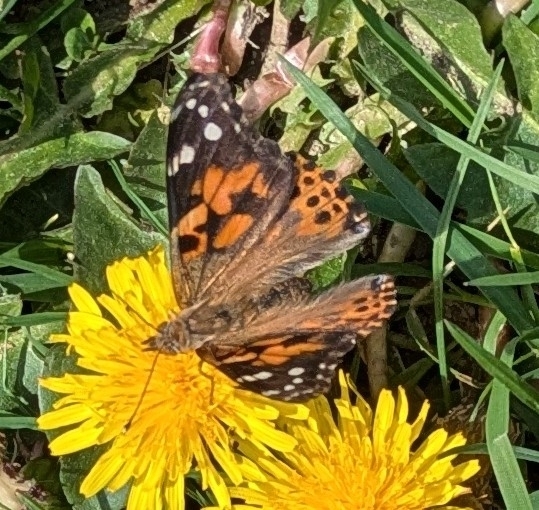
Unfortunately, “No Mow” will probably not result in a lovely meadow that beguiles neighbors or nourishes wildlife, but rather a mess of aggressive weeds (i.e. crabgrass and garlic mustard) with little benefit to wildlife. Bees need more than weeds! Creating a beautiful habitat garden that promotes biodiversity takes more thought and effort than just delaying mowing for a couple weeks.
Instead: Less Lawn More Life!
What if you want to help the environment, pollute less, and use less water—and not just in the month of May?
Organizations like Wild Ones, Homegrown National
Park, and Bee City USA suggest rethinking our lawns:
- mow less often and at a higher setting
- lower “perfection” standards
- let lawns go dormant for the summer
- add low-growing flowers and clover
- question your need for a big, lawn-type space
- convert space from lawn to more diverse and natural plantings with greater ecological oomph
Today, about two percent of the contiguous 48 states—roughly 40 million acres—is lawn. If 10% of these lawns were replaced with intentional, ecoregion-appropriate, pollinator-friendly plants, we would add 4 million acres of habitat!
These ideas are especially important for those of us in urban areas that have fewer resources for wildlife. Rather than green deserts of lawn, we could stitch together acres of connected habitat, waste less water, use fewer chemicals, welcome billions of birds and bugs back to our neighborhoods, and discover the quiet, daily enchantment of nature’s beauty right in our backyards.
Shrinking Your Lawn
If you’re curious about converting part or all of your lawn into plantings with more peppy pollinator pizzazz, but you need help or inspiration, join the Less Lawn More Life challenge!
The 2026 Challenge kicks off May 7, with a live online event with Robin Wall Kimmerer (author of Braiding Sweetgrass), but you can join any time!
The Less Lawn More Life challenge teaches you how to turn your yard into a thriving ecosystem, with 12 expert-led weekly challenges, free land assessment from Wildr, and prizes and badges!
Let’s restore nature, one yard at a time!
Further Reading
Less Lawn More Life | lesslawnmorelife.com